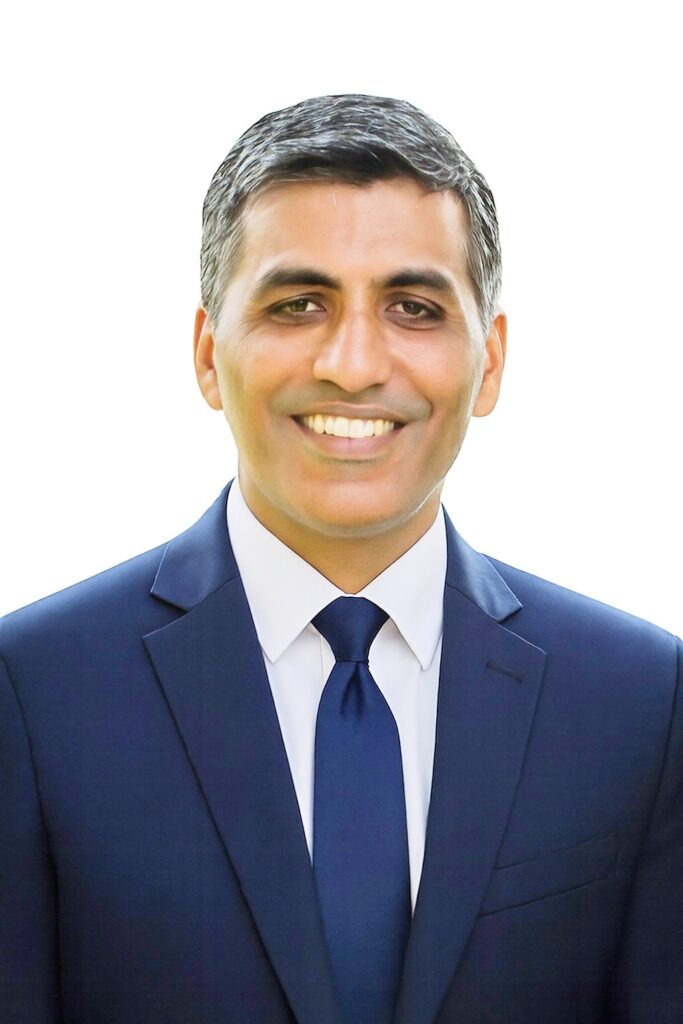
Ashish Taneja
Senior Vice President
Citibank Singapore
Title:
The Quiet Handover: Engineering Trust When AI Stops Suggesting and Starts Deciding
Keynote:
The traditional view of AI risk management frameworks entailed a framework whereby ultimately it was the decision of humans while the machine simply advised humans in making their decisions. This arrangement is fast changing. Now, as the systems start acting on our behalf, executing processes for us and making decisions for us, the trust arrangements between man, institution, and machine have changed, though quietly, without adequate change to the corresponding governance. The responsible AI is no longer just a compliance tool but an element of critical infrastructure. Institutions that will thrive over the next ten years are those who saw trust as engineering rather than branding. This is not an AI race but a trust race.
Abstract: Over a period of ten years, the discussion surrounding AI risk and responsibility relied on one underlying assumption: artificial intelligence guides but human beings still decide. That assumption is becoming obsolete; agentic systems are increasingly used in banking processes, in triaging in health care, in customer service, and in regulatory flows, carrying out acts rather than making recommendations.
In this presentation, we propose two terms to rethink the existing discourse. “Trust debt” is an implied, accumulated price paid by the institution any time an organization uses AI while lacking oversight capacity, reversibility mechanisms, and contestability. The term “governance latency” stands for an increasingly widening gap between the model and institutional maturity where the bulk of AI harm currently takes place.
Based on practitioners’ experience in global banking operations, in designing governance for AI, and in deploying agentic systems, we will discuss the current state of well-known theoretical frameworks: the NIST AI RMF, the EU AI Act, ISO/IEC 42001, Singapore’s AI Verify, and NAIS 2.0. We will then proceed to introduce a pragmatic model for trust engineering: testable characteristics such as auditability, reversibility, contestability, graceful failure, and proportionality of human involvement translating the underlying principles into operational code.
Takeaway: After participating in this talk, you will be able to distinguish the actual AI risks from compliance theater. You will have a checklist for evaluating the trustworthiness of your systems. Moreover, you will gain new insight about the future trajectories of AI governance as the AI futures become sovereign, agentic, and pluralistic at once.